
The Bereavement Journey® in Prisons
Helping people in prison process grief, past and present
We believe The Bereavement Journey® in prisons could contribute to safer prisons and communities across the UK
In 2025, chaplains from prisons across England and Wales approached AtaLoss to ask about running The Bereavement Journey® in prisons. In response, pilots took place in seven prisons during 2025–26, with remarkable results.
This page explains why bereavement support in prisons matters and what the pilots found. You can also hear from a chaplain and from prisoners who took part.
Why bereavement support matters in prisons
1. Bereavement can be a root cause of criminal behaviour
People entering custody are disproportionately likely to have experienced parental loss and multiple or traumatic bereavements, often alongside disrupted family networks and limited opportunities to grieve.
91% of young men in custody have experienced bereavement ¹
41% of bereaved persistent young offenders had experienced the loss of a parent ²
Grief overload significantly contributed to imprisonment for 34% of respondents ³
2. Bereavement may have directly led to the offence
“Following the death of his brother by hanging, [X] set house on fire and tried to kill himself. He had had enough. This is why he is in prison.” ⁴
“The day he picked up his baby's ashes he turned violent with everyone. This caused his offence and he was remanded that day.” ⁴
“Normal way of coping on anniversaries following son's death, having been hit by a car of joyriders, was drinking and taking drugs or getting locked up through petty crime to keep himself safe from causing more serious harm.” ⁴
(Cruse evidence. APPG, 20th May 2026, Reoffending and Unresolved Grief – The case for Bereavement Support in Prisons)
3. Bereavement is a challenge in prisons
Prison can compound loss, making grief more complex.
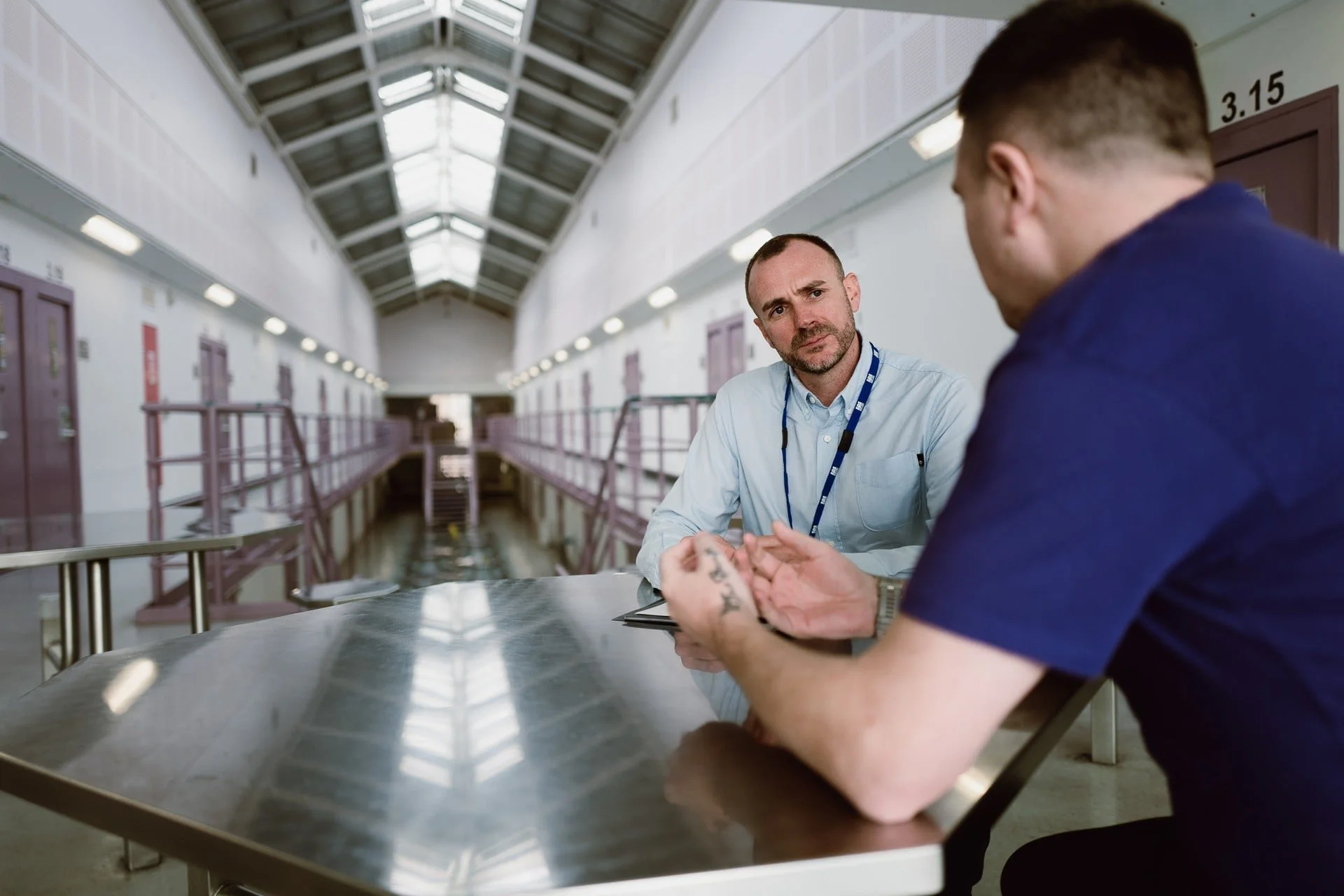
People bereaved while serving a prison sentence face additional barriers to grieving, including limited privacy and separation from family and support networks.
“Prisoners have limited access to their natural circles of support that they may have outside of the prison. Inside prison, it is more difficult to find help or people to trust, even for talking and sharing.” (Prison chaplain)
4. Grief that remains unresolved can affect a person’s emotional wellbeing, relationships and behaviour.
Without opportunities to work through grief constructively, loss can remain unresolved and contribute to emotional distress, instability and destructive behaviour.
Unresolved grief is not only a contributory factor to offending behaviour but failure to address prisoners’ grief overload compromises societal and institutional safety and successful rehabilitation. ³

The Bereavement Journey® prison pilots
In partnership with Prison Fellowship and prison chaplains, AtaLoss piloted The Bereavement Journey® in 7 prisons (male and female) during 2025-2026; a group support programme for prisoners to explore their bereavement alongside others, and consider how loss has affected, and continues to affect, their lives.
Results of the Prison Pilots
The pilots showed remarkable results:
Strong engagement and retention ⁵
94% reported coping with grief moderately or significantly better ⁵
Increased emotional openness and relational stability ⁵
Greater engagement with prison life and support provision ⁵
Potential contribution to custodial stability and rehabilitation ⁵
Participants reported meaningful personal change:
“Without the help of The Bereavement Journey® I would never have faced my grief at all.” ⁵
“After 50+ years I have processed the first close loss I ever had.” ⁵
Extended delivery at HMP Foston Hall over an 18-month period additionally showed:
Hear from a prison chaplain
“The impact that I have observed as a prison chaplain has far surpassed anything that I could possibly have imagined out of a bereavement course.”
Revd Douglas Creighton, Facilitating Chaplain at HMP Edinburgh and AtaLoss’ Voluntary Prisons Project Lead, describes what the pilot showed and the ideal project expansion.
Hear from the prisoners themselves
Participants at HMP Edinburgh wanted to tell the outside world about the difference The Bereavement Journey® had made to them, so AtaLoss was invited in to film.
“It’s night and day... if I hadn’t had this kind of support, it would have really changed my experience in prison because I’m sure that the grief would have manifested in all sorts of other things: mental health issues, possibly lashing out.”
Help us extend the programme across UK prisons
The pilots have shown both the need for bereavement support in prisons, and the difference structured support can make. But the work cannot continue without further funding.
Following the success of the pilots, eight further pilots are now underway. We have received grants to adapt the materials and now seek funding to take the project forward.
In partnership with Prison Fellowship and Scottish Prison Chaplains we have the opportunity to roll the programme out across the prison establishments of England, Wales and Scotland, and hope to extend to Northern Ireland.
We also want to provide bereavement support to prisoners' families, train local church volunteers to offer support following release, and evaluate the programme's longer-term impact.
If you or your organisation could help fund the next phase, please contact us at supportercare@ataloss.org.
“Desistance research highlights mechanisms that support movement away from offending, including emotional regulation, identity reconstruction, narrative reflection, future orientation and relationship repair. The Bereavement Journey® offers all of this and more.”
- Yvonne Tulloch, CEO of AtaLoss
“Our volunteers see every day the complex personal histories that many people in prison carry with them. The Bereavement Journey® offers a constructive way for people to address unresolved grief and begin to move forward. It is encouraging to see how well this model can work within the prison environment.”
- Stephen Hawkins, Operations Manager at Prison Fellowship
Help fund AtaLoss’ work
Our core activity needs support to continue
The experience of people in prison shows how bereavement can affect wellbeing, behaviour and the future.
AtaLoss helps bereaved people find support through:
public awareness,
signposting at AtaLoss.org
and community support, including The Bereavement Journey®.
Public awareness, signposting and community training underpin the success of The Bereavement Journey® in prisons and need to be funded alongside The Bereavement Journey® in prisons for the project to succeed.
Our wider aim is to reach the 6 million people who are significantly bereaved every year with help to navigate their circumstances. Timely support can reduce the risk of negative consequences which would mean significant savings to the public purse.
Please help us reach more bereaved people in a timely way by funding our wider work.
Contact: supportercare@ataloss.org
Further reading